

Ford Small Block Engine: Where It Stands Today
Few engines have left as lasting an impression on American roads as the Ford small block V8. Introduced in the early 1960s, this engine family shaped decades of Ford vehicles, making its mark on everything from high-performance pony cars to everyday pickups. This page explores the origins of the Ford small block engine, how it was gradually phased out from new Ford models, and where its influence lives on for today’s drivers and enthusiasts.
For those in Hot Springs and beyond, our team at Riser Ford remains a trusted source for exploring Ford’s legendary engine lineup, both past and present.
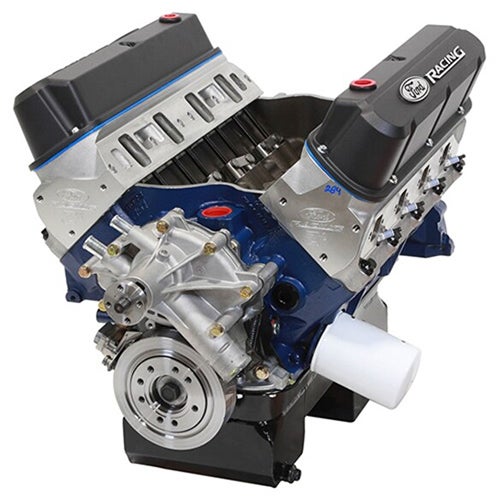
From 1962 Onward: The Rise of Ford's Classic Small Block
Ford's small-block V8 debuted in 1962 with a 221-cubic-inch engine introduced in the Ford Fairlane. The architecture quickly expanded to include larger-displacement versions, including the 260, 289, 302, and 351 Windsor. The 289 became particularly notable in the 1960s Mustang, while the 302 became one of Ford's most recognizable V8s and was later marketed as the 5.0L.
The 351 Windsor added greater displacement and became widely used in both performance and truck applications. Over the following decades, Ford's small-block V8 family powered a broad range of cars, trucks, and performance vehicles. Beginning with the 1991 model year, Ford began phasing in its Modular V8 family, an overhead-cam design that gradually replaced the older small-block engines in applications including the Mustang, F-Series, and Explorer.
Where the Small Block Stands Today
The classic Ford small block is no longer used in new Ford production vehicles. Today, Ford's 5.0L V8 name lives on in newer engine architectures, including the Coyote V8 used in the Mustang GT and the 5.0L Ti-VCT V8 available in the F-150.
The modern Coyote is fundamentally different from the traditional pushrod small block. It uses a 32-valve dual-overhead-cam (DOHC) design, along with direct and port fuel injection and twin independent variable camshaft timing. While the modern 5.0L shares the same displacement as the classic 302, it should not be considered the same engine family.
While the Coyote is not a direct continuation of the classic small block, both engines represent different eras of Ford V8 development. The classic small block established a long-running performance legacy, while the Coyote represents Ford's modern approach to naturally aspirated V8 performance.
Why the Classic 302/5.0L Still Rules the Aftermarket
- Parts Availability: Replacement blocks, cylinder heads, intake systems, rotating assemblies, and other components remain widely available.
- Classic Builds: The 302/5.0L remains popular for restoring and modifying classic Mustangs, F-Series trucks, and other Ford vehicles.
- Engine Swaps: Builders can choose between traditional 302 builds and modern Coyote swaps depending on their goals.
- Build Considerations: The two approaches can differ significantly in performance, packaging, cost, and everyday drivability.
Frequently Asked Questions
Ford's small-block V8 is a family of compact V8 engines introduced in 1962. The family included several displacements, including the 221, 260, 289, 302, and 351 Windsor. These engines powered a wide range of Ford cars and trucks and became particularly well known among performance enthusiasts.
The 302 and 5.0L commonly refer to the same 302-cubic-inch displacement, although Ford used the 5.0L designation more prominently as engine labeling shifted to liters. It's important to consider the specific generation and architecture because not every Ford engine marketed as a 5.0L is the same engine.
The original Ford 302 small block is no longer produced for new Ford vehicles. However, its extensive aftermarket support means replacement parts, performance components, and crate-engine options remain available for restoration, restomod, and performance projects.
No. Although both are 5.0-liter Ford V8s, they use different engine architectures. The classic 302 uses a traditional pushrod design, while the modern Coyote features dual overhead camshafts and four valves per cylinder. The Coyote is a separate, modern Ford V8 engine family.
Explore Ford's Engine Legacy with Riser Ford
For those in Hot Springs, as well as nearby communities like Arkadelphia and Magnolia, a deeper look at Ford’s engine legacy starts at Riser Ford. Whether you’re curious about classic Ford V8 history or interested in the latest performance technology found in current Mustangs or F-150s, both in-person and online resources are available to help you learn more.
Our team stands ready to guide you through the options, specifications, and performance features across the full range of Ford models. Be sure to contact us directly to confirm up-to-date vehicle specs, availability, or for assistance in planning your next build or purchase.